Section III
The Builder
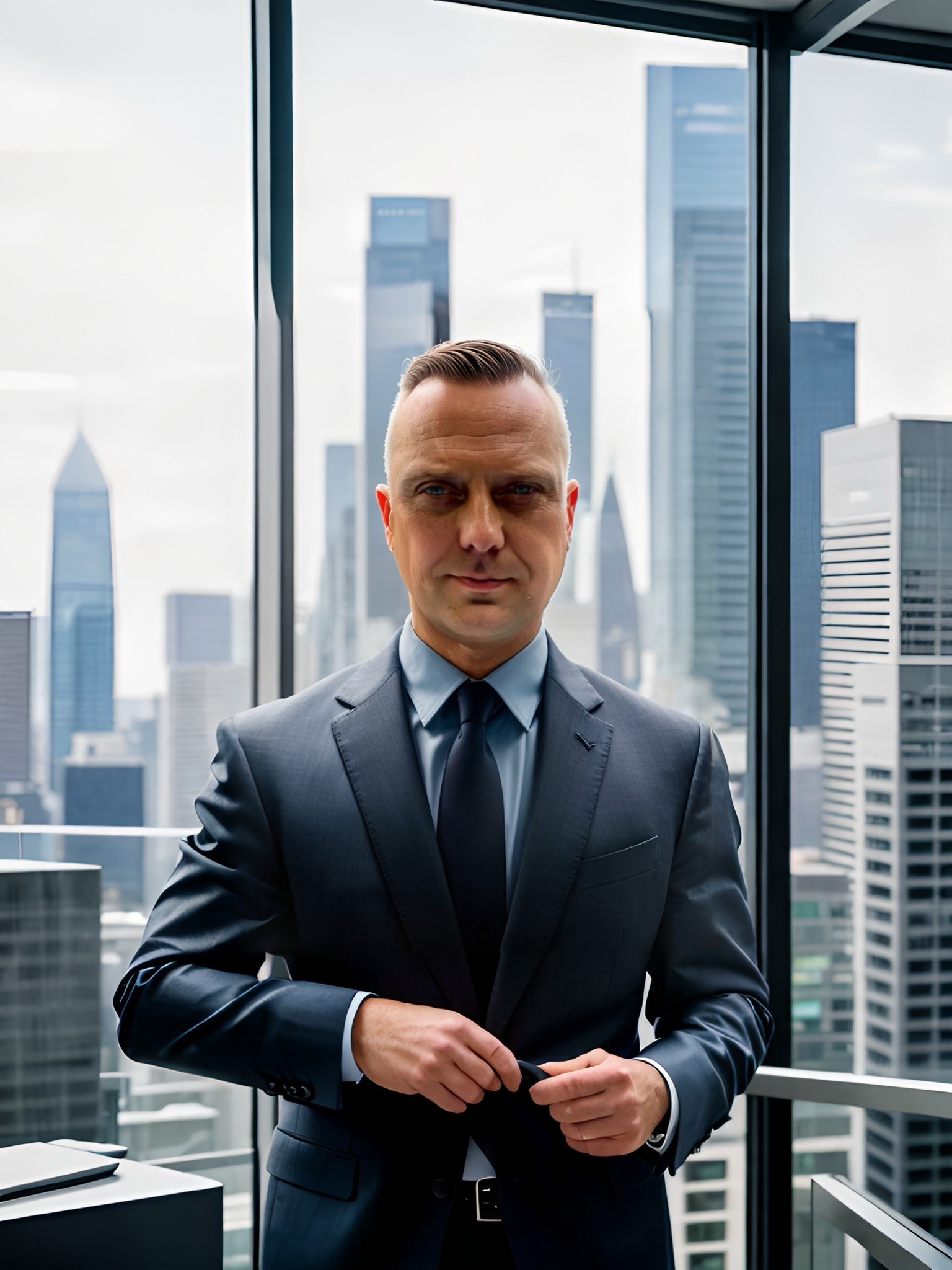
Arvydas Pakalniskis
Founder & CEO · Sole Inventor · ProBuggy #5
Before EmoPulse, my life was measured in dust clouds, broken bolts, and the kind of adrenaline that doesn't politely knock - it kicks the door in and asks if you're awake. I raced in U.S. off-road series like LOORRS and AMSOIL Championship, driving the ProBuggy #5. People think racing is about speed. It's not. Speed is the easy part. The real game is discipline - the kind you only learn when a tiny mistake costs you a wheel, a race, or a few ribs.
Racing teaches you strange things. You learn to read terrain the way some people read books. You learn to feel vibration patterns through the steering wheel and know instantly if something is wrong. You learn that chaos has rules - and if you don't respect them, the track educates you fast. And yes, the adrenaline is real. It doesn't "flow." It floods. But underneath that noise, there's structure. Always.
Years later, when I started building EmoPulse, I realized something funny: the same instincts that kept me alive on the track were the ones helping me design interpretive architectures. Pattern recognition. Signal extraction. Human-in-the-loop discipline. Understanding that systems fail not because they're slow, but because they drift, lose meaning, or collapse under noise. Racing taught me to see noise differently - not as a problem, but as information. And once you learn to read noise, you can build systems that survive it.
So no - EmoPulse didn't come from a lab or a whiteboard. It came from real dirt, real risk, real consequences, and a very real ProBuggy #5 that didn't care about your excuses. That world shaped how I think, how I build, and how I navigate high-stakes AI today. Because whether it's a racetrack or an AI system, the rule is the same: if you don't respect structure, the environment will teach you the hard way.
RACING
LOORRS · AMSOIL Championship · ProBuggy #5
PATENTS
3 patents pending
STACK
Ontological AI · rPPG · RDF/OWL · On-device ML · Edge Inference
SYSTEM
5-layer pipeline · <50ms latency · 100% on-device · Privacy by architecture
STATUS
Live prototype · Internal measurements only, not independently evaluated · Optional server-mode for enterprise audit · Integration work under way with partners in five countries
Advisory Board
Dr. Anastasia Vasina
MD, PhD (Pathology) | Fractional Chief Medical Officer | ex-CPO/CMO, Soter Analytics
Angelo Arcadu
Public Affairs & Strategic Communications | Project Delivery in Defense, Healthcare & Critical Infrastructure | Italian MoD (NATO-aligned) NATO NCAGE & UN UNGM Registered Professional